Technology upgrades are inevitable and necessary. Obsolete IT systems hinder company performance, scalability, security, and limit the ability to leverage advanced technologies such as AI or cloud solutions. However, despite their importance, many IT upgrades fail. Here are the five most common reasons why:
1. Unclear Upgrade Goals
Not every IT upgrade is justified or beneficial. Clearly defined goals and drivers must be established before initiating any project. Failure to articulate and document these objectives allows scope creep, as stakeholders attempt to influence the project to meet their own agendas. This inevitably leads to uncontrolled budget increases and, ultimately, project failure.
2. Poor Understanding of the Current State
Having a comprehensive baseline is critical for accurately assessing complexity and clearly defining project scope. Without fully understanding existing processes, tools, and their interconnections, the true impact of the upgrade will remain unknown. This often leads to discovering overwhelming complexity too late in the upgrade process, forcing costly rollbacks.
3. Designing the Future State without Feasibility Checks
Creating detailed "to-be" designs without understanding what is realistically achievable can result in an impractical wish list. If the goal is to select a market-ready solution, overly specific requirements can prevent finding suitable products or lead to excessive customization. Heavy customization not only inflates costs but often arises simply because users are reluctant or unable to envision alternative workflows.
4. Selecting a System Primarily Based on Price
Inadequate clarity in requirements—either too vague or excessively detailed—makes it challenging to objectively compare solutions from potential vendors. As a result, organizations often default to price as the simplest criterion. While attractive initially, choosing primarily based on cost frequently backfires, as true value emerges only if the project is successful within the agreed budget.
5. Underestimating Transition Complexity
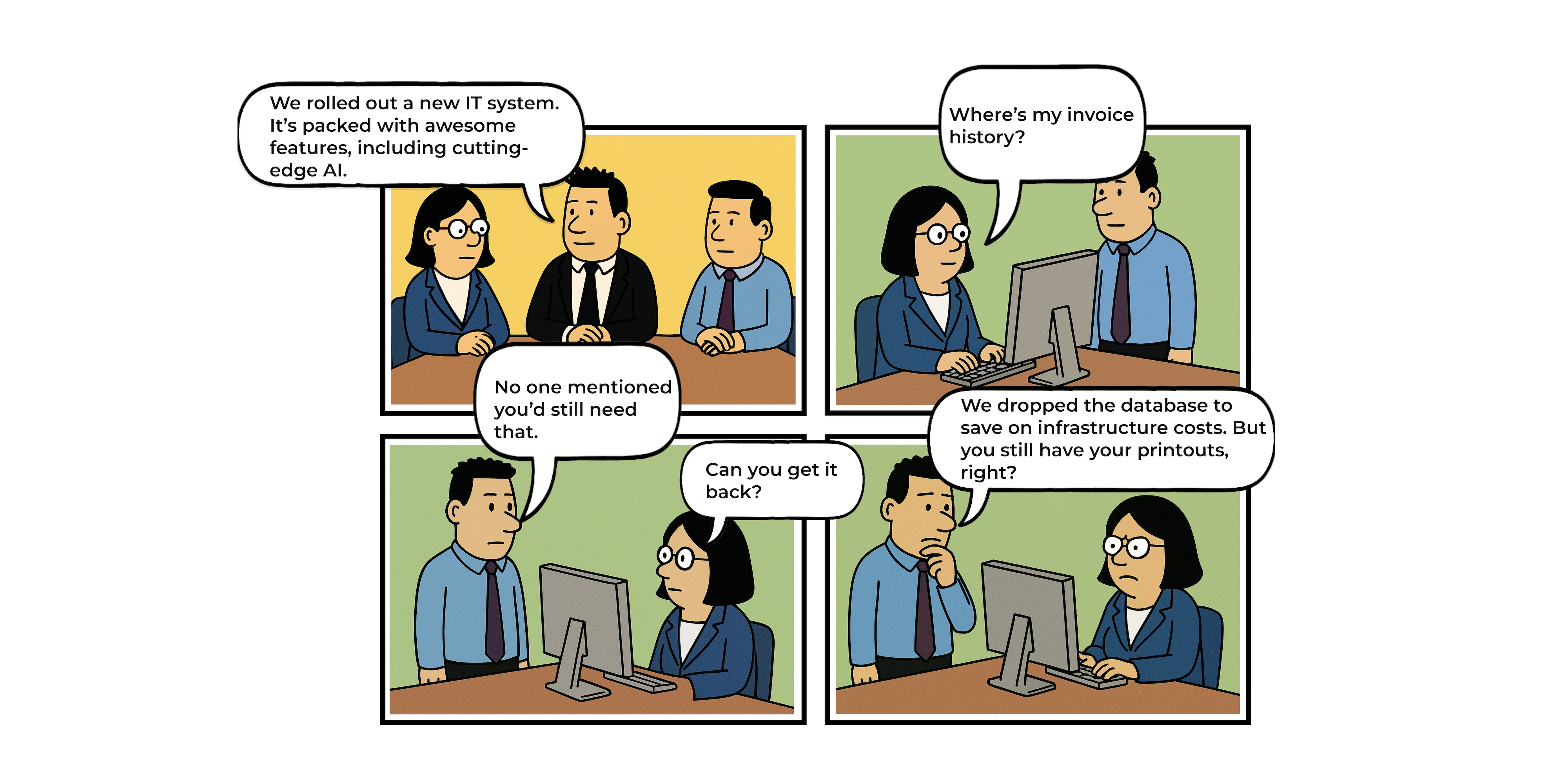
Even an excellent target solution can fail if the transition process is not carefully managed. For large-scale systems, a "big-bang" transition approach is typically unfeasible. Success requires meticulous planning, staged process migrations, and interim solutions to manage operations during the transition period. Ignoring these factors can jeopardize the entire upgrade effort, resulting in significant operational disruptions.
How to Ensure Your IT Upgrade is Successful
At B-Tree Consulting, we support companies through IT upgrade challenges using a structured process:
- Clarify Upgrade Goals: While goals must originate from your business, we help articulate and document them clearly, ensuring alignment and relevance throughout the project lifecycle.
- Current State Audit: We thoroughly audit your existing processes and IT tools, documenting them into a structured and comprehensive model. This model serves as a foundational reference for subsequent upgrade activities.
- Define Clear and Effective Requirements: We guide you in setting requirements at an appropriate abstraction level, emphasizing needs and strategic goals rather than rigid features. Utilizing the previously created model, we ensure comprehensive requirement coverage.
- Efficient and Effective RfP Process: Using clearly articulated requirements and structured documentation, we prepare detailed Requests for Proposals (RfPs), enabling you to objectively compare solutions based on quality and functionality, as well as cost. Additionally, we support market research and manage the execution of the RfP process.
- Seamless Transition Management: Effective transitions require close collaboration between selected vendors and internal teams. Our skilled program managers facilitate and orchestrate these interactions, ensuring smooth project execution and minimal disruption to ongoing operations.